
Theming and Intention for Yoga Teachers
Theming and Intention in Asana Practice
‘Theming’ is a teaching practice which introduces a particular attitudinal quality, an intention for practice, to the asana class, using a general idea or story to illustrate it. The theme is shared at the beginning of a class, and the intention you have illustrated in the theme is then woven through the class.
Your theme might be a personal story from your daily life, or a poem, or perhaps a quote you like. It expresses an expansive attitudinal quality which helps to bring your students back to a quiet, full sense of self, even as they perform the asanas.
The intention, often a single word or a pairing of words that we have highlighted in our story, is interwoven in a simple way with our alignment instructions. We ask our students to practice with this intention as their guide as they move through the physical postures. We do this in order that our students are inspired to express the feeling or attitude inherent in the intention through the form of the body.
The intention then becomes an inner alignment that can be expansive and liberating: an experience that is internalised and embodied. That is, it becomes an integral part of the actions they take. In this way our intentions help to bring mental discernment and reflection to the practice of asana.
Asanas can then become far more than physical postures. By helping to shift unconscious emotional states through the language we use, we can, as yoga teachers, help to move asana to a practice of expanded awareness.
When students take on the feeling or attitude we offer in our themes, they are less likely to be drawn into their own doubts, fears, and resistance – the ‘negative’ mind-stuff that is a part of our conditioning. In response to the language we use in our theme and the repetition of our intention, our students are more likely to be drawn towards their own inherently expansive, essential nature.
If we’re sitting in the right place internally, we’re in the asana. This is yoga from the inside-out. In this way, we can move our teaching from a primarily physical practice to an expanded yoga practice.
The Language We Use
We create out world through stories, or narratives, about ourselves, about other people and about things that happen to us, and to others. There’s a popular saying, ‘the world is as you see it’. This refers to how our narratives shape and colour the experiences we have. And it happens through language. We create our experience of our world through language.
The modern perspective is similar. We have accumulated memories in the subconscious, and we process our experiences based on our past – therefore we are ‘constructing’ our reality.
Of course, we need language to understand our world, to make sense of it. The problem arises when language is used in a way that creates emotional responses that we can’t let go of. These unresolved emotional responses are referred to as our conditioning, called karma in Sanskrit. It is conditioning that limits our experience of reality, that prevents us from experiencing our true nature, our deepest presence.
Often called samskāras, which means memories, it is the vāsanā (literally, perfume) or emotional colouring the memories have, that create our conditioning. It’s not the factual nature of the memory, the samskāra. But it’s the language of the memories that instigates the emotional responses, as well as the conditioned responses we already hold in our subtle body, either from earlier memories or from previous lifetimes. (The two words samskāra and vāsanā are however used interchangeably).
The force of conditioning keeps our perceptions, our senses, turned outwards as we keep seeking certain types of experiences. We can call this extroversion. We are drawn out of ourselves. If the emotional responses stay with us, that is, if we can’t let them go as we experience them, they become lodged within the subtle body as subtle structures. The forceful movement of prana (life force) through the nadis (subtle pathways of the subtle body )as we practice asana helps to clear the conditioning, but we also need to address the awareness of how we are practicing. Our themes, as an intention offered for the class, are a powerful way to expand that awareness.
If we reduce or eliminate the conditioning that keeps us bound to a limited viewpoint, we can see things as they really are. And we know from the experiences of the sages that it is possible to be in that state, in this body.
We are teachers of yoga, so our responsibility is to use language in a way that helps our students experience their own, inner fullness, not just in their asana practice but in their lives off the mat. And we experience that inner fullness through introversion. Keeping part of our awareness inside.
This is what drives our evolution. If we are to evolve, we must reduce or eliminate our conditioned responses, our karma, which are based on the power of words, and the emotional overlay on them. We must instead learn to keep part of our awareness inside, even as we act. We refer to this as ‘holding our centre’.
We can clear our conditioning through the asana practice, but when are we not creating more conditioning? The answer lies in the times when we’re centred. Our centre is a place of timelessness, neither rooted in attachment nor in fear. When we hold our centre, we’re not tossed around by our unresolved emotions, and the vāsanā loses its power, its hold on us. Regardless of whatever emotion we’re feeling, we can also feel equanimity. Our main challenge is that we lose awareness of how we are acting, so easily. For example, when we become defensive, we lose our centre because we’re attached to a particular kind of outcome. But I’ve always done it this way!!
The Intentions
The intentions that we use have both an expansive quality, and a quality that draws our students’ awareness inwards, and centres them as they practice. When they imagine these expansive, centering qualities as belonging to them, it’s like an inner conversation with themselves that can move them closer towards their natural state of freedom and joy, rather than holding on to the thoughts that contract their sense of who they are.
It’s possible to use language in our teaching that helps our students to recognise or perhaps clear the mental connections they’re constantly creating at each moment: the instruction the teacher gives, the feeling-sense of their body, what the person next to them is doing, the pose they’ve already labelled as ‘enjoyable’ or ‘unpleasant’. Each conditioned connection they make contracts them. Instead, the language we insert into the alignment and movement cues can help them to act from a more expanded state.
The more we ask them to practice in this way, the more they can discern that our world is constantly reflecting our thoughts and feelings back to us. They can discern how their interpretations of the world that they experience through their perceptions becomes their reality. If we want them to change that reality, perhaps to have a happier, more contented life, or to expand their reality to experience their individuality as the full purno-hum, (the expanded sense of ‘I’), then we can help them to change their interpretations of that reality. They can usefully practice this on the mat, in asana, because they are engaging in a more conscious mind-body connection.
Here is an example:
Let’s say you have a student who always wants to do the best pose in the room. Her desire is almost palpable. When she doesn’t do the best pose (in her opinion) she feels she’s let herself down. She might even feel devastated. But she keeps going, finishes the class and accepts the compliments from her fellow students about what an amazing practice she’s done. She’s a bit happier with herself now. But then she decides the next time to go to a more challenging class, and now she is devastated. She must be the worst in the room! Her feeling of unworthiness has just been given a huge boost, and another memory has been created that holds the same emotional content.
But what if your class intention had been worthiness? You’ve been emphasising a practice of seeing everything your students do as an act of self-honouring, and offering pathways to build self-respect and to honour their practice. What would have this student’s experience been then? And what about the lasting impacts she might experience?
Whatever we pay attention to will create our experience. In the above case, the student’s attention has been focused on doing the ‘best’ pose because she feels unworthy, and she’s still paying attention to that desire in the second class she goes to. But because we choose what we pay attention to, we can also choose to shift our attention and create a deeper awareness. Attention feeds the unresolved emotion and makes it stronger. But attention also has the capacity to guide awareness, that deeper part of our consciousness that can burn the conditioned deposits. When we’re aware of how we’re acting, we are better able to let go of the conditioned responses. Expansive language that holds its own fullness, such as gratitude, worthiness, self-honour or compassion, can change the internal dialogue. But it takes consistent effort.
Which is why simply reading a lovely poem or telling an uplifting story at the beginning of a class and then letting it go for the rest of the class isn’t enough. It’s a good start but the intention created by the theme needs to be repeated, often, using language that draws the students back to the feeling quality it holds. Language that already holds a quality of fullness; language that keeps them feeling centred as they act.
It does take time to find and maintain our centre, but if we don’t start encouraging our students on this journey, to act whilst holding some of their awareness inside, then – are we teaching yoga? We can teach them how to develop discernment, to listen both inwardly and outwardly, from their centre, and encourage them in noticing whether they are personally invested in what they’re doing, or not.
This doesn’t mean that we can’t experience a fullness of heart. We don’t need to stop loving what we do. Holding our centre expands our heart consciousness because we’re not acting from need. We’re acting more in alignment with the loving place that exists within us, the spiritual heart.
With gratitude to Carlos Pomeda for his gracious teachings.
If you would like to learn more about this teaching method, I am currently putting together an expanded writing on the subject, as well as a workbook to show you how to create themes and intentions, and how to weave the intentions into your asana classes.
Please contact me, Christine, at cduf47@gmail.com to express your interest.

Karma and Yoga Practice
an article by Christine du Fresne
Karma and Yoga Practice
Often mistaken as cosmic judiciary, karma in yoga is something far more personal. It speaks to the conditioning we create within ourselves, the emotional imprints that shape perception, behaviour, and ultimately our experience of reality. In this article, Christine du Fresne traces the threads of karma through Pātañjali yoga, haṭha practices, and tantric philosophy, revealing how the clearing of conditioning becomes central to our evolution toward freedom and truth.
The term karma is often used but frequently misinterpreted, treated in relation to yoga philosophy and in general conversation as a ‘throwaway’ comment.
Karma is what we call conditioning in English, and we create it. We create our psychological states when we have emotional responses we can’t let go of. This concept of karma is the basis for all the practices in Patañjali’s text, the Pātañjalayogaśāstra, using meditation as the technique to experience liberation, which entails the eradication of karma. Patañjali uses the mind to clear the mind of karmic imprints, or conditioning.
We, and only we, create our karma, our conditioning. It happens through memories, called saṃskāra in Sanskrit. Our saṃskāra (literally ‘imprint’) carry emotional imprints called vāsanā – literally ‘perfume’, the emotional colouring the memories carry. The vāsanā shape our responses to life. They can really make us suffer!
If emotional responses stay with us, if we can’t let them go as we experience them, they become lodged within the subtle body. The subtle body is that part of us which is the movement of prāṇa, or energy, along pathways we can’t see in the body. These subtle pathways (not physical channels) are called nāḍī-s.
If we hold onto any emotional responses (and just think how many emotional responses you have every day), even the ones we would describe as ‘good’, they become lodged in the subtle body as tiny, subtle crystalline structures distributed along the nāḍīs. It is in this way that the mind itself is an expression of prāṇa – it is experience crystallised.
Instead of using meditation to clear conditioning as Patañjali describes, haṭha yoga uses increased flow of prāṇa through the nāḍī-s to purify. In our āsana practice, this surging movement of prāṇa (remember that haṭha means ‘forceful’, not sun and moon) is like a river of subtle energy clearing out the vāsanā, removing impurities in the nāḍī-s. When there are impurities, karmic deposits, in the nāḍī-s, the prāṇa can’t flow freely through the suṣumṇā – the central subtle pathway.
We create and reinforce karma constantly
In meditation we have a wonderful opportunity to watch vāsanā arise, to witness and let them go. In meditation, things that come up are part of a natural process of our system attempting to heal. When vāsanā become apparent, we may allow them to dissolve. But if we engage, we are reinforcing the emotional charge associated with that memory, that saṃskāra.
Karma is the collective fruit of our actions, karma-phāla, the result of emotions and memories. They constitute our conditioning. They are the effect of our actions on our unconscious mind. If we ‘out-source’ karma to the universe, we’re not understanding that we are the ones dispensing our own karma, from within.
The way we see and experience the world is driven by our mostly unconscious conditioning, and modern neuroscience agrees with this viewpoint. The force of conditioning keeps our perceptions and senses turned outwards as we keep seeking certain types of experiences.
We call this extraversion. Extraversion creates our sense of separateness and difference. We are drawn out of ourselves through our conditioning. We see ourselves and all things as separate, different.
We need to balance extraversion with introversion if we wish to experience our Divinity. We need to practice keeping part of our awareness inside, staying centred in the space of the heart. Not easy!
But this is what drives our evolution. If we are to evolve, we must reduce or even eliminate the conditioned, karmic responses that keep us separate from our Divine nature. This is what yoga has been about since its very beginnings.
What is the evolutionary mechanism?
The mental framework of conditioning is established with language. We create our world through stories and narratives about ourselves and other people. We talk about the things that happen to us and in our perceived world. We rely upon language to understand and categorise things.
The classic saying, ‘the world is as you see it’, refers to how our narratives shape and colour the experiences we have – and it generally happens through language.
But some of us want stories about how things really are; we have a deep-seated need to know the nature of Reality. The Truth.
But what IS Reality, what IS Truth?
Throughout the ages, humanity has been given stories about the nature of Reality; wars have been fought over these narratives and whole cultures decimated. But which of these stories is the Truth and how would we know?
Śaiva Tantra’s view of Reality is that Śiva, Consciousness, and Śakti, the power of Consciousness are two interdependent aspects of One Divine Reality.
The Divine, Universal Consciousness, the one Truth in the tantric view, is both the transcendent source of all things and also immanent as all things. It is transcendent because it is not subject to the limitations of the universe, such as space, time and gravity. It is immanent because it permanently pervades the universe: the physical, material world, all creatures, and all of us. We are an expression of Universal Consciousness. Everything is.
How is language involved in our quest for the Truth?
The Tantras themselves, the sacred texts we study, are of course based in language. Indeed, many of them were written by authors who were fully liberated and awakened spiritual masters, giving us the most direct insight we can hope to have into the nature of Reality, that is possible through words.
The texts are important because they teach us the path to travel and centre we seek. In our practices we turn within, open to grace, and surrender our sense of doer-ship. By doing so, we learn to express Truth through our bodies and in relationship to everything else in this world – dynamically, creatively and joyfully.
Our practices lead us to the realisation that our current view of reality is incomplete in that we see the world as outside of us. We see difference where there is only Oneness, and we are ruled by conditional desire and the impulses of our conditioned self towards particular types of experiences – extraversion.
But Universal Consciousness, the Truth, is non-verbal, non-conceptual. It’s quite simply an experience that cannot be described – no matter how hard some have tried to describe it. It is beyond language.
Yes, āsana and meditation practices help to clear the karmic imprints that prevent us from knowing this Truth, but the higher learning is in holding our centre – the place not rooted in attachment, anxiety, or fear. We do that through introversion – turning within.
It’s so easy to attach to the great experiences we have in class and in life, and we can so easily become attached to the little anxieties that come up. We can become attached to stories around inability to do certain poses and then attached to our ability to do them well.
When we allow emotions to arise and dissolve, we eliminate the conditioning that keeps us bound to a limited viewpoint. With this practice, we can see things as they really are, and I am assured that it is possible to be in that state while in this body.
When we’re not anticipating results, we’re in awareness.
When we find a way to centre ourselves as we act, we aren’t bound by karma. And I’ll add here that it’s not just ‘going with the flow’ either, because if we ‘go with the flow’ we’ll probably be acting from our conditioning, since it’s the unconscious that drives us.
In our daily activities, if we are mindful and cultivating attention even while barraged by distractions, then we are developing expanded awareness and conditioning is less likely to take us over. We can develop the awareness that everything is transitory, and the only constant is Consciousness itself. We can hold our centre, staying calm within even as we act in a physically or emotionally strong way.
Remember too, that it is through experience that Truth is revealed. Everything else is a story, a narrative. Bringing attention inwards is not simply inviting grace, it is grace. We bestow grace upon ourselves when we take ownership of our capacity to expand. We’re both inviting the grace of Śiva and our own grace, because we are Śiva.
The power of grace gives us the capacity for introversion. The more we bring our awareness inwards, to the place of the observer, the more our experience shifts. When we witness as observer, vāsanā lose their hold on us.
As a wonderful Sufi saying goes: “God gives us the ingredients; we do the cooking”.
And we need to be constantly on the alert for the stories that pull us away. Because we’re so prone to distraction (think social media and our many screens) we need to be clearly focused on introversion. We’re swimming against a powerful tide of extraversion.
So let’s untangle the ‘out-there’ reality and get to know ourselves better through association with our inner light.
With gratitude to Carlos Pomeda for his gracious teachings.
Clarifying Patañjali: The Pātañjalayogaśāstra
an article by Christine du Fresne
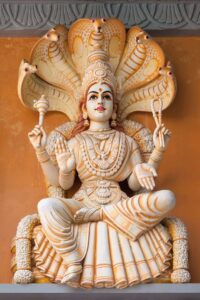
The Pātañjalayogaśāstra, popularly called Patañjali’s Yoga Sūtras, is sometimes referred to as Classical Yoga. I often hear people call them ‘the sūtras’, but there are hundreds of collections of sūtras, and Patañjali’s is but one of them.
This article seeks to clarify several misunderstandings about the Pātañjalayogaśāstra, particularly in regard to yoga teacher trainings.
Who Was Patañjali?
Śastra means authoritative commentary, and because of recent, exhaustive research by Austrian scholar Philip Maas, there is now a very strong indication that the Vyāsa who wrote the commentary on this text was Patañjali himself. The word vyāsa means ‘the arranger’, so the compiler and the commentator are most likely one and the same person.
We also now know around what date Patañjali compiled his sūtra-s: 325 – 425 CE, a time when bhaktiyoga was arising.
There’s quite a lot of confusion around this text.
Patañjali’s Yoga is also called “Rāja Yoga” by some, but the term came from Swami Vivekananda in the late 19th century when he started travelling to the west.
Because the 15th century Hatha Yoga Pradipika says that hathayoga is a ladder to rājayoga, meaning union with the divine, a path to liberation, modern teachers have inferred that hathayoga aligns to Patañjali.
BKS Iyengar emphasised the teachings of the Pātañjalayogaśāstra in his hathayoga teaching, with the result that Iyengar studios globally teach it. Patthabi Jois also called his system of hathayoga “Așṭānga Yoga”, which caused confusion, because again it links hathayoga to Patañjali, who used the eight-limbed path in the second pada (chapter) of his work.
Differentiating Haṭha Yoga and Patañjali’s Yoga
At the outset, I want to make it quite clear that Patañjali’s text has nothing to do with hathayoga.
The Pātañjalayogaśāstra is about the mind, karma (the conditioning of mind), and meditation. The teachings and practices he gives are for the express purpose of clearing the mind of the imprints of karma.
Hathayoga uses the body; subtle body and physical body including the breath, for the same purpose: to clear the mind of its imprints.
Patañjali’s sūtras are 4th century CE and hathayoga appears in the 11th century CE.
We can appropriate parts of his teachings for our own uses in hathayoga, but that doesn’t mean that it is Patañjali’s yoga, because his was a yoga practice of meditation and arises out of a dualistic understanding of creation.
Hathayoga is Śaivite in practice (although we must consider the role of Tantric Buddhism) and has a non-dual understanding of creation.
Patañjali’s yoga and hathayoga are universes apart.
Even though there is a sūtra that mentions ‘āsana’, (YS II.46) this word means to sit: ‘ās’ means “to sit”, (quite easy to remember!), and ana is the neutral ending of the word, like our English ‘ing’. Sitting.
The word is used in the context of meditation.
There is also confusion around sūtra 46 which says that “Posture should be steady and comfortable” (1). This sūtra must be read along with the following sūtra, 47, which states ‘by the relaxation of effort and by absorption in the infinite”. (2) Sūtra 46 and 47 comprise a single sentence.
Yes, we can bring a meditative quality to our āsana, but if mental effort is being made together with physical effort then that’s not going to happen. But it does happen in meditation when there is absorption in the nondual state.
I mentioned before that Patañjali compiled these sūtra-s – there’s nothing original about them – so we need to dive into some historical context.
Patañjali was a Brahmin by birth, and his was the first work by a Brahmin to use teachings from mostly non-Brahmin traditions: the early groups called the Śramana, which included Buddhism and Jainism. Brahmin teachings are from the Vedas but Patañjali clearly thought these non-Vedic teachings of the Śramana were authoritative.
Around 500 BCE, in northern India, an area including some of Nepal and Uttar Pradesh, there was a rise in new groups (about 14 in all, including Buddhists and Jains) of renunciant ascetics, collectively called śramana-s, which means “strivers”.
They were concerned with finding ways to end the cycle of rebirth and the karma-driven suffering that characterises human existence. They realised we are bound by karma and this bondage leads to samsāra, the wheel of reincarnation. To address this, they developed techniques of meditation, with the goal of mokșa, or liberation, which entailed the complete eradication of karma.
Clarifying Karma
This concept of karma is the basis for the practices in Patañjali’s text, and it is frequently misunderstood, so let’s take a quick look at it.
The original meaning of karma is the effect our memories have on us. Our past shapes how we see things; we are conditioned by how we see things, and therefore we are not free. We live our lives through our subconscious.
So, two points are pertinent to karma:
- We are the products of our subconscious
- Unless we do something about it, we become set in our ways and accept our conditioning, our karma.
Karma is not a system of retribution. What drives our long, individual journey of evolution is karma – the conditioning we acquire through memory. But memory imprints or samskāra are not actually the issue – samskāra are simply a built-in function of consciousness. We need that memory function.
What we want to do to burn off karma is diffuse the charge of the memory: the vāsanā. If we can remember things without an emotional charge, then the vāsanā are cleared, and karma is cleared.
Yama and Niyama: Not Moral Principles
This becomes a very important consideration when we come to yama and niyama in the second pada of Patañjali’s sūtras.
I’d like to emphasise here that yama and niyama are not moral or ethical principles. They have been appropriated to function as moral principles, but this is an overlay of modern religious dogma on what is really a practice of avoiding karma.
There are no ethical arguments at all in Patañjali’s sūtra-s. We are simply practicing the elimination of things that will disturb us inside, things that won’t allow us to meditate. There is no discussion of morality.
However – and this is an important distinction – we do become more ethical when we practice yoga. Virtue comes from inside, it’s a by-product of the practice of clearing karma.
Yoga is from the inside-out. If we direct efforts to external behaviour without developing self-awareness, then our efforts are from the outside-in.
The five yama come from Jainism – they are things you don’t do. The five niyama are things you need to do to avoid creating karma. We mustn’t project religion onto these.
The Intersection of Traditions and Philosophies
Karma is not part of the Vedic tradition. Their tradition was to do with ritual, and it had a very positive world outlook. A glass half full outlook.
The Śramana outlook on the world was rather negative. As ascetic renunciants, theirs was a glass half empty outlook, but when the Brahmins of the Vedic tradition encountered the Śramanas, they began to take on their ideas. The ideas of the Śramanas began to be incorporated into the Upanishads, which deal with concern for the inner life, or knowledge of the reality underpinning the external world.
In a nutshell, the idea was if the senses are not brought under control, the result is rebirth, but if you can control the senses by means of the mind, you can attain the highest state, which is identified as purușa, the indwelling person, sometimes referred to as the individual soul.
As well, the Śramanas had a practice called tapas, meaning austerity or toil, used for the purpose of stilling the mind or annihilating past karma.
Throughout this period there were other attempts to codify and systematise the practice of yoga, but because by nature it is alive, constantly growing and evolving, it proved difficult – until Patañjali came up with his authoritative statement of the techniques and doctrinal traditions of yoga, drawing heavily on Buddhism and Jainism.
There was, however, already a systematised, codified metaphysics, called Sāmkhya. Metaphysics refers to a philosophy of being and knowing, and Sāmkhya seems to have been the earliest such philosophical system to take shape in the late Vedic period. It is concerned with the path of reasoning to attain liberation: jñānayoga. It wasn’t about practices.
While the followers of yoga rely on experiential methods, those of Sāmkhya rely on scriptural interpretations. Sāmkhya analysed the manifold material elements of prakrti (material nature), with the goal of extricating purușa from its bondage in the material world of things, thoughts and other mind-stuff.
You might have knowledge of the Tantric tattva-s as a system that describes the principles of reality beginning with Paramaśiva, then Śiva/Śakti, and on down through Māyā and her handmaidens until we get to prakrti and purușa.
The Sāmkhya system starts with prakrti and purușa and provides the metaphysical infrastructure for Patanjali’s sūtra-s. The Tantric sages added the additional 11 tattva much later. The purușa sits at the top of the hierarchy of tattva-s in the Sāmkhya system and the classical yoga of Patañjali. It is the ultimate principle, a transcendent reality: spirit as opposed to matter/energy.
The system proposes that there’s a plurality of divine souls, meaning that each sentient being has their own, but they’re not part of one, over-arching conscious entity as in non-dual systems such as Tantra. This means that Pātañjali’s yoga can never be about complete union. Rather, it is about separation: separating purușa from its bondage in the material world of prakrti.
But in Tantric metaphysics, the purușa isn’t the highest principle. The purușa is understood as a contracted form of Universal Consciousness, Paramaśiva. Our practice is to realise that we’re already ‘It’. Tantra rejects the goal of Pātañjali’s yoga, that of retreating to and dwelling in a divine soul that is cut off from the world.
What we discover in our Tantric practice is that instead of learning to walk a path to reach a specific destination, we are and always have been walking it. Yoga it is a path of remembrance, not renunciation.
The Nature of Patañjali’s Practice
Patañjali’s method was different from Sāmkhya; he presents a path of meditation focusing on the nature of mind and consciousness, and on the techniques of concentration, or meditative absorption, to provide a practical method to isolate the purușa, or soul, from the material elements of nature.
It is radically dualistic in its description of reality. It explains the real self as pure spirit that cannot be found in the body or mind. In fact, Patañjali describes the body as distasteful (3), particularly bodily secretions.
If the material world, nature or prakrti, is radically separate from purușa, or spirit, we have a fundamental dilemma of being entangled in a world in which we can never realise our true nature. So, the system of Patañjali requires the practitioner to transcend the human condition entirely, through the practices described. And these practices were for serious and advanced practitioners, requiring an enormous degree of asceticism and renunciation, so they weren’t for the householder, or for women.
However, like the Buddha, Patañjali was pragmatic, scientific and methodical. He is very consistent, and he sifted through centuries of philosophy and technique to distil these 195 sūtra-s in which every word is rich and redolent.
As we know, the Sanskrit word sūtra denotes a thread to connect the readers’ mind to a world of associations and meanings. Aphorisms lend themselves to a wide variety of interpretations, so we need a teacher to unpack them, and that teacher helps us understand from the perspective that they hold. Then, in time, we understand how to apply the sūtra-s to our lives.
It is important to remember that it’s an oral tradition. Information is made so concise that it can be memorised. So in order to study or teach the Pātañjalayogaśāstra, it’s best to find – first – a translation by a scholar, not an interpretation from someone who has their own agenda. Secondly, find a teacher who can unpack the sūtra-s in a scholarly way, but at the same time is able to make them accessible to all.
My teacher, Carlos Pomeda, is one such teacher, and there are others.
Recommended texts:
- Edwin F Bryant: “The Yoga Sūtras of Patañjali”, 2009.
- Swāmi Hariharānanda Āranya: ‘Yoga Philosophy of Patañjali”, 1983.
- “The Yoga Sūtras of Patañjali”, by Edwin F Bryant, 2009, North Point Press, P 283, II 46
- “The Yoga Sūtras of Patañjali”, by Edwin F Bryant, 2009, North Point Press, P 287, II 47
- “The Yoga Sūtras of Patañjali”, by Edwin F Bryant, 2009, North Point Press, P 287, II 40
With gratitude to Carlos Pomeda for his gracious teachings.
About the Author
Christine du Fresne, Registered Level 3 Teacher with Yoga Australia, is passionate about the non-dual view of yoga and its associated practices. She began regular yoga practice during her last year of art school in Sydney in 1986, and within three years had completed the teacher training requirements for Iyengar certification. Having later become certified in the Anusara method of teaching, she ran a yoga studio in Sydney for some years, and eventually moved up to the Mid North Coast of NSW. She teaches classes here, facilitating retreats and workshops, travelling occasionally to soak up the knowledge of Tantra and hatha yoga from global teachers, including Carlos Pomeda, whose generous teaching has provided valuable tools of illumination and direction.